
Military and Service Flags: How to Honor Our Heroes the Right Way
Few symbols carry as much weight as the flags that represent our military branches and service members. These aren’t just pieces of fabric, they’re tangible connections to sacrifice, duty, and the men and women who’ve defended our freedoms. Whether you’re a veteran, a military family, or simply a proud citizen looking to pay tribute, understanding how to properly display and care for military flags matters deeply.
We’ve spent over 21 years at AC Flag & Banner helping families, businesses, and communities across the Denver metro area find the right flags to honor those who serve. And in that time, we’ve learned that getting these details right isn’t just about following rules, it’s about showing genuine respect. In this guide, we’ll walk you through everything from understanding different military flag types to proper display protocols, half-staff guidelines, and meaningful ways to showcase service flags in your home or community.
Understanding the Different Types of Military Flags
Military flags come in various forms, each with its own history, symbolism, and purpose. Before you can properly honor our heroes, it helps to know exactly what you’re displaying and why it matters.
Branch-Specific Service Flags
Each branch of the U.S. Armed Forces has its own distinctive flag, and these aren’t interchangeable. The Army flag, adopted in 1956, features a blue background with the War Office seal. The Navy flag displays a darker blue field with the Navy seal in the center. The Marine Corps flag, one of the most recognizable, showcases the iconic Eagle, Globe, and Anchor emblem on a scarlet background.
The Air Force flag, relatively newer since the branch was established in 1947, presents ultramarine blue with the Air Force coat of arms. The Coast Guard flag features its distinctive racing stripe emblem. And don’t forget the Space Force flag, officially unveiled in 2020, which represents our newest military branch with a dark blue field and delta symbol.
We also see a lot of customers looking for service star flags, those banners families display to indicate a loved one is currently serving. A blue star represents an active service member, while a gold star signifies a family member who died during military service. These flags hold profound personal meaning and are often displayed in windows or on flagpoles.
POW/MIA and Commemorative Flags
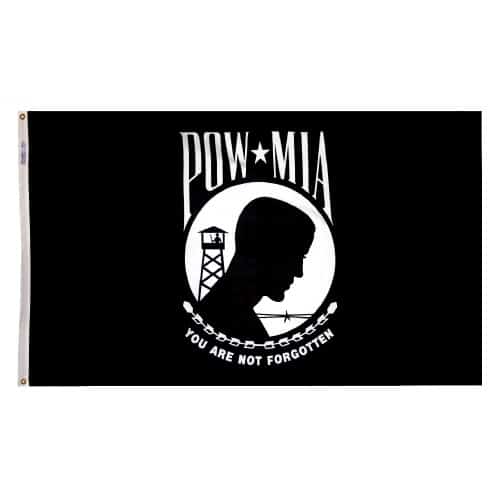
The POW/MIA flag holds a unique place in American culture. It’s the only flag other than Old Glory that has flown over the White House, and federal law requires it to be displayed on specific days at federal buildings, national cemeteries, and war memorials. The stark black-and-white design featuring a silhouetted prisoner and guard tower serves as a solemn reminder that we haven’t forgotten those who never returned.
Commemorative flags also play an important role in military remembrance. You’ll find flags honoring specific conflicts, Vietnam, Korea, World War II, Iraq, and Afghanistan, as well as flags recognizing veterans broadly. Purple Heart flags honor those wounded in combat, while flags commemorating specific units or divisions help preserve military heritage and unit pride.
Proper Flag Display Etiquette and Protocols
Displaying military flags isn’t something to approach casually. The U.S. Flag Code and military tradition provide clear guidance on how to show proper respect, and getting these details wrong can unintentionally cause offense.
Order of Precedence When Flying Multiple Flags
When flying multiple flags on separate poles, the U.S. flag always takes the position of honor, that’s the flag’s own right, which appears on the left as you face the display. Military branch flags follow a specific order of precedence based on the date each service was established:
- U.S. Army (June 14, 1775)
- U.S. Marine Corps (November 10, 1775)
- U.S. Navy (October 13, 1775)
- U.S. Air Force (September 18, 1947)
- U.S. Coast Guard (August 4, 1790)
- U.S. Space Force (December 20, 2019)
Wait, you might notice the dates don’t perfectly align with the precedence order. That’s because the Army and Marine Corps were technically established on the same congressional action, but tradition gives the Army first position. The Navy’s later founding date in the same year places it third.
When flags are displayed on a single pole, the U.S. flag must be at the top, with military flags arranged below in order of precedence. The POW/MIA flag traditionally flies directly below the U.S. flag or, when flown with service flags, immediately after Old Glory in the precedence order.
Indoor vs. Outdoor Display Guidelines
Indoor and outdoor displays have different requirements. For indoor setups, think offices, VFW halls, or home displays, flags are typically mounted on staffs with decorative finials. The U.S. flag should be positioned to the speaker’s right (audience’s left) with other flags arranged in order of precedence.
Outdoor displays demand weather-appropriate flags. All-weather nylon or heavy-duty polyester flags hold up better against sun, wind, and rain. We always recommend illuminating flags that fly after sunset, it’s both a sign of respect and a requirement under the Flag Code if you want to display 24/7.
Size matters too. A general rule: your flag’s length should be approximately one-quarter to one-third the height of your flagpole. Flying a tiny flag on a massive pole looks odd, and an oversized flag on a short pole can create wear issues.
When and How to Fly Military Flags at Half-Staff
Half-staff displays are among the most powerful ways we honor fallen heroes and national mourning. But there’s more nuance here than many people realize.
The President can order flags to half-staff following the death of principal government figures, or as a mark of respect for other deaths or tragedies. Governors can issue half-staff proclamations for their states. For military losses, you’ll often see half-staff orders following the death of service members in combat or significant military figures.
Key observance days include Memorial Day (half-staff until noon, then full-staff), Peace Officers Memorial Day (May 15), Patriot Day (September 11), and Pearl Harbor Remembrance Day (December 7). We recommend checking official proclamations regularly, unexpected orders do occur following national tragedies.
The proper technique matters: raise the flag briskly to the top of the pole first, then lower it slowly to half-staff (the middle point between the top and bottom). When lowering at day’s end, raise it briskly to the peak again before lowering completely.
Here’s something that trips people up, “half-staff” applies to flags on poles with staffs or vertical poles. “Half-mast” technically refers to ships. On land, we say half-staff. And if you’re flying multiple flags, all flags should be lowered to half-staff, not just the U.S. flag.
Caring for and Retiring Military Flags With Respect
A tattered, faded flag doesn’t honor anyone. Part of respecting what these flags represent means maintaining them properly, and knowing when it’s time to retire them with dignity.
Regular inspection is key. Check for fraying edges, fading colors, tears, or excessive soiling. Nylon flags can often be hand-washed with mild detergent and air-dried. Cotton flags require more delicate care and may need professional cleaning. We’ve seen customers extend flag life significantly just by bringing flags in during severe weather.
Storage matters too. Fold flags properly and store them in dry, cool locations away from direct sunlight. Moisture invites mildew, and heat accelerates fabric breakdown.
When a flag reaches the end of its serviceable life, it should be retired respectfully, typically through burning. Many American Legion posts, VFW chapters, and Boy Scout troops conduct formal flag retirement ceremonies, particularly around Flag Day (June 14). These ceremonies treat worn flags with the dignity they deserve rather than simply discarding them in the trash.
At AC Flag & Banner, we accept worn flags for proper retirement. It’s a small service, but one that matters to the families and organizations we work with. Many people don’t realize this option exists, and we’re always glad to help ensure flags are retired the right way.
Meaningful Ways to Display Service Flags in Your Home or Community
Beyond following protocols, there are genuinely moving ways to incorporate military flags into your personal space or community.
Shadow boxes and display cases allow you to create tribute displays combining a folded flag with medals, photographs, patches, and other memorabilia. These make powerful focal points in home offices, living rooms, or dedicated memorial spaces. We’ve helped families create these displays for generations, they become treasured heirlooms.
Flagpole installations remain the most visible way to honor service. A residential flagpole in your front yard allows you to fly the U.S. flag alongside your loved one’s branch flag. Telescoping poles work well for smaller properties, while in-ground poles make striking statements for larger yards.
Community displays have real impact too. Veterans memorials, courthouse lawns, and civic buildings benefit from properly installed flag displays. We’ve worked with communities across the Denver metro area to design flag installations that honor local veterans, from simple arrangements to elaborate displays featuring all service branches.
Don’t overlook indoor options. Desk flags and tabletop stands bring military pride into offices and workspaces. Wall-mounted flag display cases work beautifully in entryways, dens, or halls of honor. Banner-style displays can commemorate specific units, deployments, or family military history.
One approach we particularly love: creating a “wall of honor” featuring framed service photos alongside miniature flags representing each family member’s branch. It tells a story while showing respect.
Conclusion
Honoring our military heroes through proper flag display isn’t complicated, but it does require attention and intention. From understanding the distinct meanings behind each branch flag to following half-staff protocols and retiring worn flags with respect, these details matter because what they represent matters.
We’ve been helping families, businesses, and communities display their pride and gratitude for over two decades. At AC Flag & Banner, we carry a full selection of military branch flags, POW/MIA flags, commemorative banners, and all the hardware you need to display them properly. Whether you’re setting up a home flagpole, creating a memorial display, or outfitting a community space, we’re here to help you do it right.
The men and women who serve deserve our best effort. A well-maintained flag, properly displayed, speaks volumes about the respect we hold for their sacrifice.
