
The History of the American Flag: From 13 Stars to 50 and the Stories Behind Every Change
Few symbols carry as much weight as the American flag. From its humble beginnings with just 13 stars representing a fledgling nation to the iconic 50-star banner we recognize today, the history of the American flag is a journey through revolution, expansion, and enduring national pride. Each star and stripe tells a story, of battles fought, territories gained, and a country constantly redefining itself. In this text, we’ll explore how the flag evolved over nearly 250 years, the legends surrounding its creation, and why it remains one of the most powerful symbols of freedom in the world.
The Birth of the First American Flag in 1777
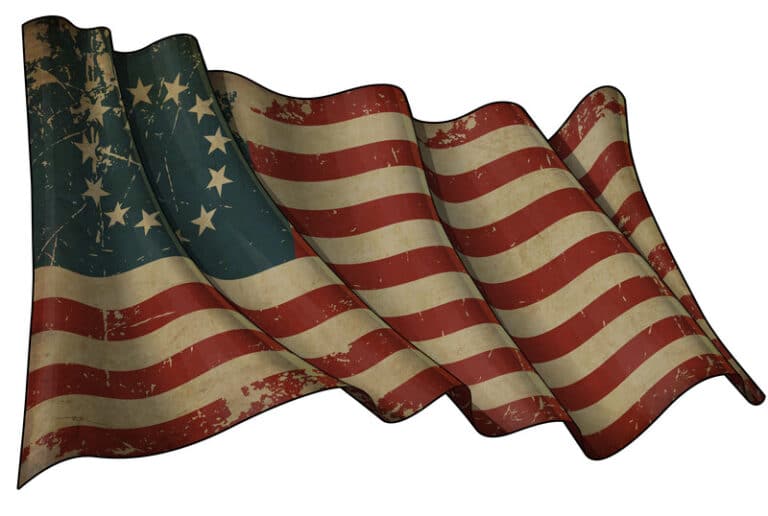
On June 14, 1777, the Second Continental Congress passed the Flag Resolution, establishing the first official flag of the United States. The resolution was simple but significant: “Resolved, that the flag of the thirteen United States be thirteen stripes, alternate red and white: that the union be thirteen stars, white in a blue field, representing a new constellation.”
This wasn’t just a piece of cloth, it was a declaration. The 13 stars and 13 stripes represented the original colonies that had broken away from British rule. The colors themselves carried meaning: red for valor and hardiness, white for purity and innocence, and blue for vigilance, perseverance, and justice.
What’s fascinating is that the resolution didn’t specify how the stars should be arranged. This left early flag makers with creative freedom, leading to several variations in those first years. Some arranged stars in a circle, others in rows, and some in unique patterns we’d barely recognize today. The flag was still finding its identity, much like the young nation it represented.
Early Flag Designs and the Betsy Ross Legend
Ask most Americans who made the first flag, and they’ll say Betsy Ross. It’s a story we’ve heard since childhood: George Washington himself visited her Philadelphia upholstery shop in 1776, and she sewed the very first Stars and Stripes.
But here’s the thing, there’s no solid historical evidence to support this tale. The story didn’t emerge until 1870, nearly a century later, when Ross’s grandson shared it publicly. No documents from the Revolutionary era mention her involvement.
Does that mean it’s false? Not necessarily. Betsy Ross was indeed a skilled seamstress who made flags for the Pennsylvania Navy. She may well have contributed to early American flag production. The legend persists because it’s a compelling narrative, a hardworking woman playing a pivotal role in our nation’s founding.
What we do know is that many seamstresses and flag makers contributed to early designs. The lack of standardization meant flags varied wildly. Some had six-pointed stars, others five. Some arranged them in circles, squares, or seemingly random patterns. It was beautiful chaos, reflecting a nation still figuring out who it wanted to be.
The Star-Spangled Banner and the War of 1812
By 1814, the flag had grown. Vermont and Kentucky had joined the union, bringing the count to 15 stars and 15 stripes. It was this version that flew over Fort McHenry during the British bombardment of Baltimore, the flag that inspired Francis Scott Key to write “The Star-Spangled Banner.”
Key watched the battle from a British ship, where he was negotiating a prisoner release. Through the night, he could see the flag illuminated by rocket fire. When dawn broke and the banner still waved, he knew the fort had held. He scribbled the poem that would become our national anthem on the back of a letter.
The flag itself was massive, measuring approximately 30 by 42 feet. Mary Pickersgill, a Baltimore flag maker, sewed it with help from her daughter and nieces. Today, that very flag, tattered but preserved, hangs in the Smithsonian’s National Museum of American History.
This moment cemented the flag’s place in American identity. It wasn’t just a military standard anymore. It was a symbol of resilience, proof that the young nation could withstand even the mightiest empire’s assault.
How the Flag Act of 1818 Standardized Future Changes
Adding stripes for every new state was becoming impractical. By 1818, five more states had joined, and Congress realized they couldn’t keep adding stripes forever. The flag would become unwieldy, the stripes impossibly thin.
So they passed the Flag Act of 1818, a piece of legislation that still governs our flag today. It established that the flag would return to 13 stripes, honoring the original colonies, while new stars would be added for each state admitted to the union. These additions would take effect on the Fourth of July following a state’s admission.
This was smart design thinking. It created a flag that could grow with the nation while maintaining visual coherence and historical connection. The 13 stripes became a permanent reminder of where we started, while the constellation of stars would chart our expansion.
The Act didn’t specify star arrangement, though. That detail would be left to each president or the flag makers themselves for many years to come. It wasn’t until the 20th century that official star patterns became standardized through executive orders.
Westward Expansion and the Growing Number of Stars
The 19th century saw explosive growth. The Louisiana Purchase, the Mexican-American War, and the relentless push westward brought new territories into the fold. And with each new state, another star joined the blue field.
Texas in 1845. California in 1850. Oregon in 1859. The flag changed so frequently during this era that some versions flew for only a year before being replaced. Between 1836 and 1912, we cycled through no fewer than 17 different flag designs.
The Civil War added particular poignancy to the flag’s meaning. President Lincoln refused to remove stars for the seceded Southern states, insisting the union remained unbroken. When the war ended, those stars had never left, a powerful statement about national unity.
By 1912, President Taft finally issued an executive order standardizing the flag’s proportions and star arrangement. The 48-star flag, with stars in six horizontal rows of eight, flew from 1912 to 1959, the longest-serving design in our history. It saw us through two world wars and became the flag most Americans of that generation knew by heart.
The 50-Star Flag and Its Enduring Legacy
When Alaska and Hawaii became states in 1959, the flag needed updating once more. President Eisenhower approved a new design featuring 50 stars arranged in alternating rows of six and five. This version debuted on July 4, 1960, and has flown ever since, making it our second longest-serving flag design.
Interestingly, the winning 50-star design came from an unlikely source: a 17-year-old high school student named Robert Heft. He created it as a class project and received a B-. When his design was selected, his teacher changed the grade to an A.
Today, the American flag flies over government buildings, schools, homes, and businesses across the nation. It’s planted on the moon. It drapes the coffins of fallen service members. It’s waved at Fourth of July parades and Olympic ceremonies.
At AC Flag & Banner, we’ve spent over 21 years providing high-quality American flags to homes, Fortune 500 companies, and sports teams nationwide. We understand that when you display the Stars and Stripes, you’re connecting to this rich history, to every star added and every battle that banner survived.
Conclusion
The American flag’s evolution from 13 stars to 50 mirrors our nation’s own journey, from a collection of rebellious colonies to a continental superpower. Each change reflects growth, struggle, and an unwavering belief in what those stars and stripes represent. Whether you’re flying a flag at home or displaying one at your business, you’re carrying forward a tradition nearly 250 years in the making.
